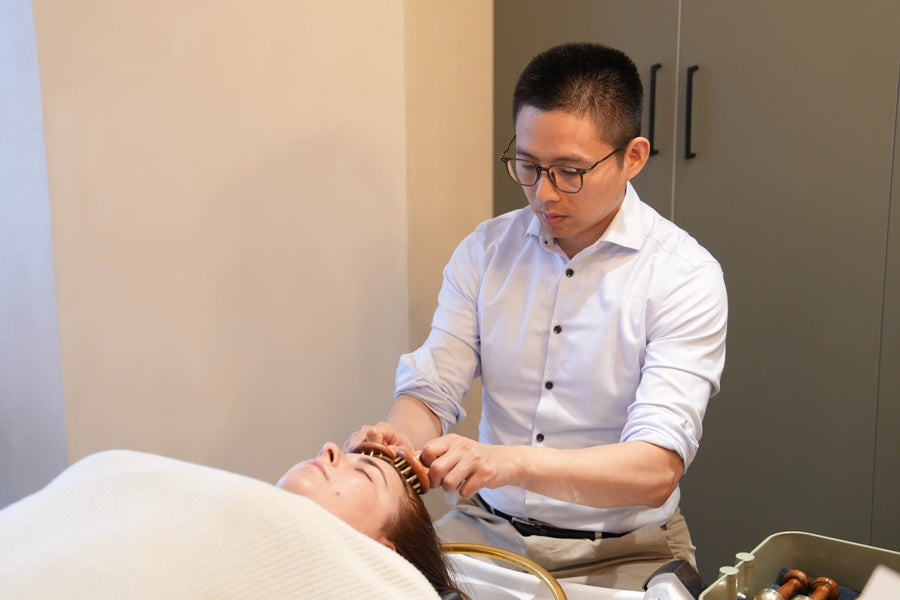
Head spa is growing fast, and many salons now offer a service under that name. In this context, being “one more head spa” is no longer enough to fill a diary. What we see at the Pro Headspa Academy, after training more than 600 professionals, is consistent: the practitioners who last are the ones clients come to for a clear reason. This article covers the foundations of the “Finding your niche” module from our Business and marketing course, designed by Jak Zheng.
Why specialise when everyone offers a head spa?
Because a generic service is easy to copy. A well-executed discovery treatment or signature ritual is essential to get started: these are what you will sell most at the beginning. But a competitor can offer the same thing tomorrow, two streets away. What they cannot copy quickly is recognised expertise on a specific subject, and the trust that clients have built up in you on that subject.
Specialising also changes how people find you. A client almost never looks for “a treatment” in the abstract: she is looking for a solution to something that bothers her, or for an experience she needs. The more clearly your offer answers that search, the simpler your message becomes, and the easier it is to remember and recommend.
Finally, specialising is not primarily a marketing question. As Jak Zheng points out in the course, the best marketing in the world will never replace an excellent service. A niche is built on real expertise and a flawless client experience; Instagram, TikTok or advertising then only amplify what already exists.

How do you identify your clients’ real needs?
A business works when it solves a real problem. Before choosing your speciality, you need to understand what the people you want to welcome are going through: what worries them, what tires them, what they have already tried without success. This is what the course calls “pain points”.
The best source of information is already in your salon. The requests that come up during the diagnosis, the questions asked at the basin, the comments after a treatment say a great deal about your actual clientele. A structured diagnosis, which starts by listening before observing, helps you collect them regularly; we explain it in our article on the three stages of a head spa consultation.
Look around you too. The Google reviews of nearby salons show what clients appreciate and, above all, what they missed. A neighbourhood may have several relaxation-focused addresses and none that really takes the time to explain the condition of the scalp, or the reverse. That gap, when it matches your skills, is often your best lead.
Which niche to choose: scalp care or relaxation?
The course relies on two concrete examples, which correspond to the two pillars of head spa.
The scalp care niche is aimed at clients concerned about hair falling out, or an oily, dry or itchy scalp. They come to understand and to be followed up. Your credibility then rests on your knowledge of trichology, the quality of your diagnosis and your ability to show what you observe. A diagnostic camera such as the LinaVision Vision Ultra makes your advice visible: the client sees her scalp on screen, and you can compare images from one session to the next. One limit must remain clear: head spa is not a medical treatment. When hair loss is significant or sudden, your role is to refer the client to a doctor or dermatologist, and that honesty strengthens trust rather than weakening it.
 LinaVision Vision Ultra
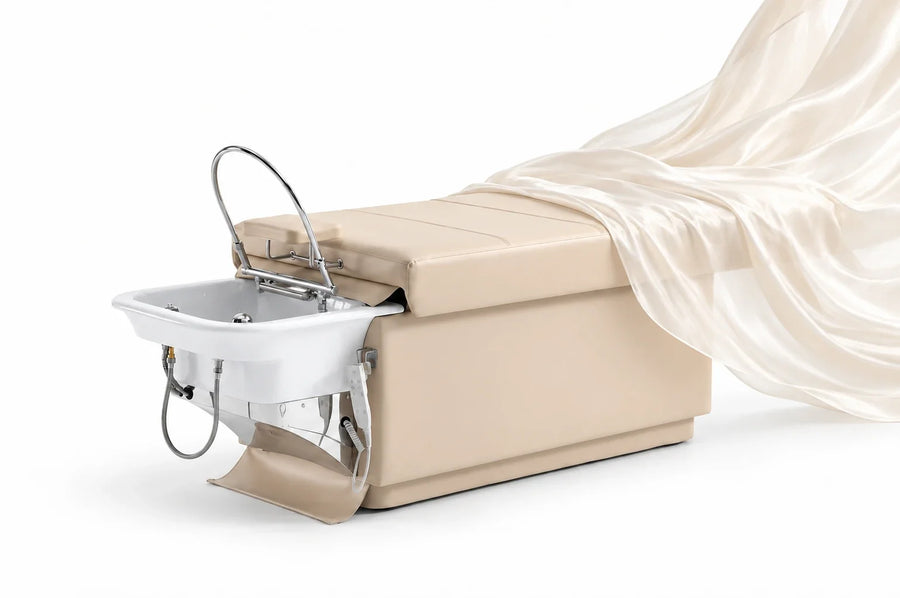
The relaxation niche is aimed at clients who above all want to switch off: fatigue, stress, the need for a real break. Here, everything depends on the quality of the experience. Silence first: on the Headspa Bed Ultra, the shower arch works without a motor, so there is no pump noise, and the ceramic basin avoids the splashing sound of water. Comfort next, from the headrest to the bed surface. Then the sensations that extend the water treatment: the mist of the Mist Pro, included with the bed, and the warmth of the Sauna Dome Ultra, which combines heat and red light while the client is lying down. The Headspa Bed Ultra is the only plumbed-in bed on the market compatible with this dome, which makes it possible to offer a ritual that is hard to reproduce.
 Headspa Bed Ultra
 Mist Pro
 Sauna Dome Ultra
| Scalp care niche | Relaxation niche | |
|---|---|---|
| What the client is looking for | Understanding the condition of her scalp and being followed up | Switching off, resting, taking a real break |
| What your credibility rests on | Trichology, diagnosis, clear explanations | Technique, silence, comfort, a consistent experience |
| Equipment that serves the niche | LinaVision Vision Ultra diagnostic camera | Headspa Bed Ultra, Mist Pro, Sauna Dome Ultra |
| What your communication shows | Scalp images, advice, follow-up over time | Treatment room atmosphere, sensations, moments of calm |
| Loyalty rhythm | Regular follow-up sessions | Regular relaxation appointments and gift cards |
Should your original profession guide your niche?
Yes, and it is often your greatest asset. A hairdresser is used to observing the hair fibre and the scalp, and her clients already confide their hair concerns to her: the scalp care niche comes naturally. A massage therapist or beautician masters touch, rhythm and welcoming clients in a treatment room: the relaxation niche directly extends her know-how. Starting from what you already do better than average saves you months.
Your original profession also influences the set-up. A hair salon without a treatment room can turn its shampoo station into a treatment space with the Reva AIR Spa, a reclining chair in a zero-gravity position, rather than fitting out a dedicated room. A beauty institute with a treatment room will be better off investing in a complete bed. Our guide to making a head spa space profitable helps you check that the project stands up before you invest.
 Reva AIR Spa
A niche is not a prison, though. You can keep an accessible offer to introduce people to head spa, and even offer both dimensions. What matters is that one dimension clearly dominates your image: it is what gives clients a specific reason to choose you, and to recommend you.

Frequently asked questions
Does specialising mean losing clients?
Not in practice. You can keep a discovery offer open to everyone; specialisation concerns your image and your main expertise. Above all, it attracts more motivated clients, who come back and recommend you for a clear reason.
Do you need specific equipment for each niche?
Equipment must serve the promise. For a scalp care niche, the priority is being able to show and monitor the scalp. For a relaxation niche, silence, comfort and sensations such as mist or warmth make the difference. Start with what directly serves your speciality.
Can you change niche later?
Yes. A niche evolves with your experience and your clientele. The key is to choose a clear direction to start with, then adjust it based on what you observe in the treatment room.
Turn your expertise into a signature.
Positioning, diagnosis, trichology, protocols: the Pro Headspa Academy gives you the foundations to build a solid speciality. Start with the Online Head Spa Training, or tell us about your project.